Iran elected as vice-chair of BRICS Institute of Future Network
TEHRAN – Following the establishment of the Iran branch of the BRICS Institute of Future Network (BIFN), the country has been elected as the vice-chair of the institute.
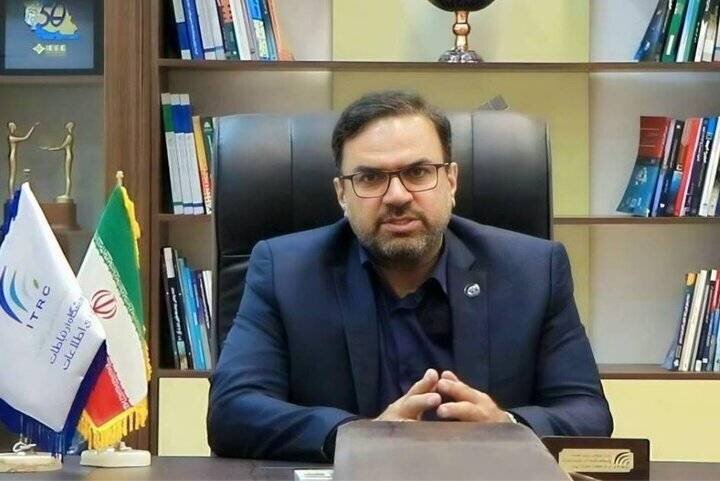
Highlighting the country’s recent achievements in BRICS cooperation on innovation, technology, and communications, Mohammad-Hossein Sheikhi, head of the Information, Communication, and Technology (ICT) Institute, said these interactions have entered a new phase through Iran’s active participation in the BIFN. The country's role has moved beyond membership to active involvement in the network, Mehr news agency reported.
The strategic partnership will contribute to boosting synergy between the country’s innovation ecosystem and major global economies, he added.
The BRICS Institute of Future Networks (BIFN) is a collaborative platform for BRICS nations to research and build next-generation telecommunication technologies.BIFN helps member countries work together on digital connectivity. It began from early ICT plans to share research and set network standards.
Iran is the fourth country to have established a national branch of BIFN following China, India, and Brazil. BIFN serves as a platform to enhance cooperation between Iranian scientific and research centers, universities, knowledge-based companies, and innovative entities and their counterparts in BRICS member states, Sheikhi noted.
The country has nominated experts in four fields, including artificial intelligence (AI), future communications, Industry 4.0, and electromagnetic effects, seeking to directly integrate the country’s expert capabilities into the network’s study and decision-making processes.
The election of Iran’s representative as the vice-chair of the BIFN, operating under the leadership of the People’s Republic of China, provides a great opportunity to participate in discussions on future generations of communications, advanced network technologies, and communication infrastructure. Besides exchanging ideas, Iran aims to put forward perspectives and proposals to develop joint initiatives, the official further noted.
The official elaborated on Iran’s active participation in proposing a governance model for the BIFN permanent secretariat, emphasizing the need for an efficient, transparent, and participatory mechanism to coordinate the network’s activities.
Given Iran’s strategic location and access to maritime and international transport routes, the country has also played an effective role in examining the technical and communication aspects of the BRICS South-South Submarine Cable Project, Sheikhi said.
Referring to Iran’s role in the BRICS innovation cooperation network, he noted that the country has sought to leverage the capabilities of universities and knowledge-based companies to facilitate the exchange of knowledge and experience within BRICS member states’ innovation ecosystems by suggesting proposals and feedback.
New technologies, digital economy
The official went on to say that the documents and the topics raised in ICT working group have been examined from the perspective of national interests, and Iran’s specialized proposals have been presented in alignment with priorities for technology development and the digital economy.
He expressed hope that these measures would further pave the way for the development of joint projects, technology exchange, and the strengthening of the country’s science, technology, and innovation diplomacy within the markets of BRICS member countries.
Iran proposes BRICS+ develop reliable computing power networks
Iran’s representative at the BRICS Future Network Innovation Forum 2026, held in Shenzhen from June 16 to 17, proposed the establishment of a cooperation framework for the BRICS Plus partnership to develop future digital infrastructure, strengthen industrial cooperation, and promote cross-border interactions among member states.
Delivering a speech, titled ‘From connectivity to reliable computing power networks; enabling shared digital growth, industrial cooperation, and transboundary interactions’, Sheikhi outlined Iran’s views and proposals in developing future digital infrastructure, ISNA reported.
“Connectivity, network coverage, and bandwidth are essential for digital development, but meeting emerging needs requires an approach that goes beyond traditional network development,” the official said.
The expansion of technologies such as artificial intelligence (AI), industrial Internet of Things (IoT), smart logistics, smart energy systems, modern financial technologies, and digital platforms requires integrated, smart, and reliable infrastructures, he stressed.
Expounding on the concept of trusted computing power network, Sheikhi said future networks should not be simply seen as a data transmission platform, but should serve as an infrastructure for connecting networks, providing computing power, ensuring secure data flow, promoting digital trust, supporting industrial applications, and enabling interactive ecosystems.
Highlighting Iran’s capacities in energy, transportation, ICT, financial technologies, and cyber security fields as well as the country’s growing scientific and academic capabilities, the official voiced Iran’s readiness to play an effective, constructive, and operational role as a regional and technological partner in BRICS Plus joint agenda to develop future digital networks.
BRICS Plus partnership will serve as a practical platform for cooperation among interested countries, research centers, universities, industries, and technological partners. The cooperation framework will be centered around ‘reliable infrastructure’, ‘industrial value creation’, ‘interactions, standards and digital trusts’, and pave the way for the development of joint efforts in evolving technologies, Sheikhi further noted.
The official went on to say that BRICS Plus cooperation should move beyond exchanging views and reports and lead to implementing joint projects, setting up test beds, developing technical learning, industrial applications, and cooperation.
Guided by the Ministry of Industry and Information Technology (MIIT) of China, the BRICS Future Network Innovation Forum 2026 convened at the Wuzhou Guest House in Shenzhen.
The forum was co-hosted by the Shenzhen Municipal Bureau of Industry and Information Technology, the China Academy of Information and Communications Technology (CAICT), and the BRICS Institute of Future Networks.
MT/MG
Leave a Comment